Amrita Datta Haughn
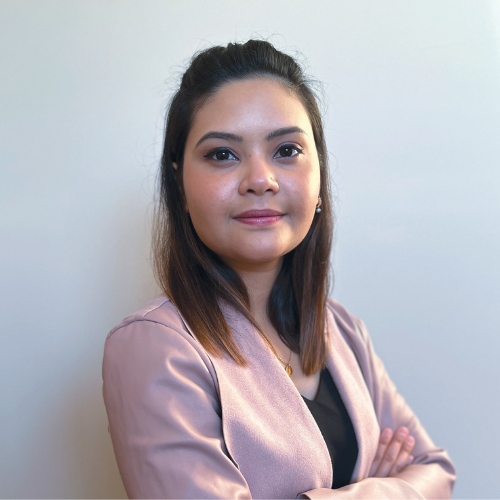
Visiting Lecturer in Visual Communication Design, 2022 Virtual Global Learning Fellow
Herron School of Art and Design
Internationalized Courses:
Typography
Cross-Cultural Design
Having studied and worked across cultural contexts, I bring a perspective shaped by adapting to new environments while contributing to the strengths of American education. Intercultural understanding plays an essential role in preparing designers to lead in an increasingly competitive global landscape. Designing within a diverse society requires a strong yet open framework—one that values innovation, collaboration, and practical experience while maintaining a clear design language. These principles reflect the goals of contemporary design education, where creative leadership and global awareness are key to long-term success. Virtual exchange serves as an effective tool for engaging with international perspectives while reinforcing the central role of design pedagogy. I developed a two-month virtual exchange collaboration to strengthen cross-cultural dialogue, expand global design literacy, and enhance curriculum relevance. The project emphasized idea exchange and professional standards through collaboration with an international faculty partner in a typography course.
“
“How might we empathize with one another when we do not share a common cultural experience?”
Amrita DattaEven when cultures speak the same language, they do not always understand one another. However, Design is the core language shared between students studying in Herron and their South Korean counterparts. Instructors and students have been meeting through multiple Zoom meetings to engage in constructive conversations aimed at developing an intercultural collaborative project. Herron students have been highly encouraged to develop relationships with students through social networking platforms like Mural, WhatsApp & Kakao Talk. Each week, students from each country are given the same prompts to identify design features that are key to designing a cultural artifact. In the typography course, students decide how they transition through the Design Thinking Process as they strive to develop innovative design solutions. They have the ability to work in small groups, with each one consisting of 6 students in total - 3 from each university. The students are tasked with finding their own problem space. This enables students to complete the learning objectives of the course by analyzing cultural and environmental identities within a contemporary design context. This also features interpretations that are related to the exchange of course theories and other understandings of identity to develop their intercultural competence. Developing this cultural artifact by defining their problem space teaches students about the values that can be ascertained through cultural exchanges. This also teaches students about the significance of intercultural tolerance.
In addition to recognizing their place within a multicultural society while working through their course objectives, the students are following these IU Indianapolis Dimensions of Global Learning:
- Analyze their own beliefs, values, assumptions, experiences, and/or communication styles in respect to those of at least one other culture.
- Practice intercultural communication with the intent of cultivating respectful and productive collaboration, dialogue, and engagement with others.
- Demonstrate understanding of the workings of other nations, cultures, and/or the geopolitical processes and systems that connect the world.
- Explain the global, international, and/or cultural dimensions of their disciplines, professions, and/or educational interests.
- Summarize the consequences of policies, global systems, and/or historical trends for people as well as how people the world over impact these processes.
- Apply learning from internationalized experiences in the communities and contexts in which they live, work, learn, and/or serve.
Benefit to the Students:
During the virtual exchange projects, students develop their ability to engage with individuals belonging to different ethnicities, nationalities, religious affiliations, and cultural backgrounds. Cultural exchanges and research design perspectives are pursued through comparative and collaborative tasks based on prompts. This also includes a strong emphasis on synthesizing different forms of data, applying theories, and presenting their progress together each week. This pedagogical structure of online collaboration encourages students to explore principles of autonomy and reciprocity while receiving first-hand experience with investigating models of visual inquiry. Finally, this approach instills a comprehensive understanding of visual culture by exploring its impacts within the design and abroad.
“
“Being able to collaborate and learn from our Yonsei peers has greatly enriched how I view communication and design. Having insight into another culture has helped me to approach the design process in a more global sense and has taught me to consider solutions that honor values and social systems that differ from my own.”
Lauren Rutter, Sophomore at Herron School of Art & DesignBenefit to the Faculty Member:
The internationalization of my courses has brought opportunities to work with professors and students based in other parts of the world and understand the pedagogical shift in design practices that converge in cultural nuances. This facilitates a design process that exposes cultural awareness while valuing the creative vision. Employing virtual exchange pedagogy may ultimately lead to presentations and publications that could diversify the American higher education system. Additionally, the Virtual Global Learning Fellow Grant Program at IU Indianapolis allows faculty to cultivate research collaborators. It also provides researchers with cross-cultural connections. It is a worthwhile incentive if you are concerned about the prospect of securing funding opportunities for your intercultural collaboration.